
What Is Third-Party Building Product Certification

What Is Third-Party Building Product Certification And When Do You Actually Need It?
Third-party building product certification is independent verification that a building product meets a recognized standard, performed by an accredited body that has no financial stake in the outcome. Manufacturers use it to prove code compliance to building officials, specifiers, and buyers. It is not a one-time test. A certification is maintained through ongoing factory inspections for as long as the product is on the market.
If you manufacture a building product and someone has asked you for "an approval," "a listing," or "a report," this is the ground you are standing on. Below is what certification is, who needs it, and what getting one actually involves.
Certification is a formal attestation that a product conforms to a specified standard, issued by an organization independent of both the manufacturer and the buyer. The word that carries the weight is independent. A manufacturer can test its own product and publish the results; that is first-party. A customer can test it before buying; that is second-party. Neither carries the same authority with a code official as a third party who is accredited, audited, and does not benefit from a passing result.
What makes a third party credible is not its equipment. It is its accreditation. An accreditation body in the United States, most often A2LA audits the certifier against an international standard governing how certification bodies must operate, then re-audits on a fixed schedule. Twining Consulting, Inc. (dba.,RADCO) is A2LA-accredited to ISO/IEC 17065:2012 under Certificate No. 7770.01.
So when a building official accepts a certification, they are not really trusting the certifier. They are trusting the accreditation behind it. That is why the certificate number and the accreditation scope are worth asking for, every time.
Do Building Products Have to be Certified?
Not every product, and not always. Building codes give the building official the authority to require evidence that a product complies with the code, and to decide what form that evidence has to take. In practice this means certification is required in three common situations.
The first is when the product is structural or life-safety critical like anchors carrying structural loads, fire-rated assemblies, roof coverings in high-wind regions. The second is when the product is new enough that no prescriptive code provision covers it, so it has to be approved as an alternative material or method. The third is contractual: many specifiers, general contractors, and big-box distributors will not accept a product without third-party documentation regardless of what the code strictly requires.
That third case catches manufacturers by surprise more than the other two. A product can be entirely code-legal and still be unsellable because the specifier writing the project manual requires a listing you do not have.
Who Certifies Building Products in the United States?
Building products are certified by accredited certification bodies. These are organizations accredited to ISO/IEC 17065, the international standard for bodies certifying products, processes, and services. A related but different standard, ISO/IEC 17020, accredits bodies that perform inspections. Some projects need one, some need both.
Certification bodies are distinct from evaluation service agencies, which issue evaluation reports representing a technical opinion that a product complies with the code.The two work together often. A certification body performs and reviews the testing, and the manufacturer submits that work to the evaluation agency. Confusing the two is one of the more expensive mistakes in this field, because it usually surfaces after the testing has already been paid for.
What Does the Certification Process Involve?
Four stages, in order:
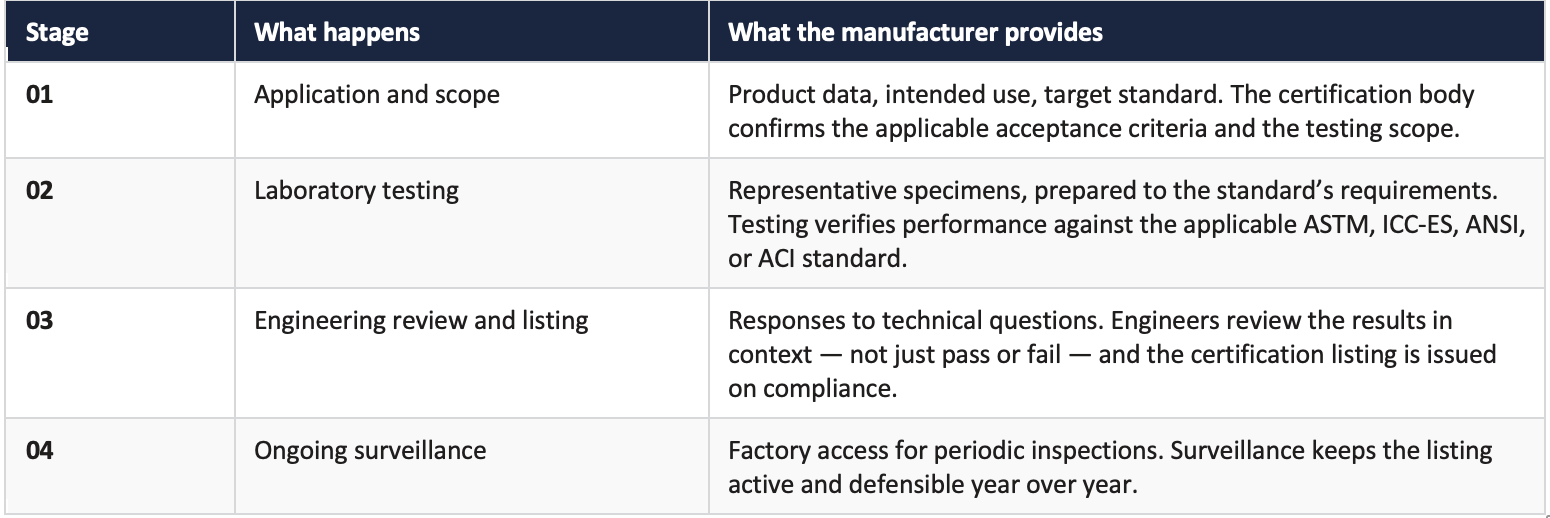
Most manufacturers plan carefully for the first three stages and are surprised by the fourth. Stage four is not an administrative formality. It is the reason the certification means anything. A test result describes one set of specimens on one day. Surveillance is what connects that result to the product coming off the line eighteen months later.
Which Building Products Can be Certified?
Scope varies by certification body, and a body can only certify within the categories its accreditation covers. Twining Consulting currently certifies across twelve building product categories:
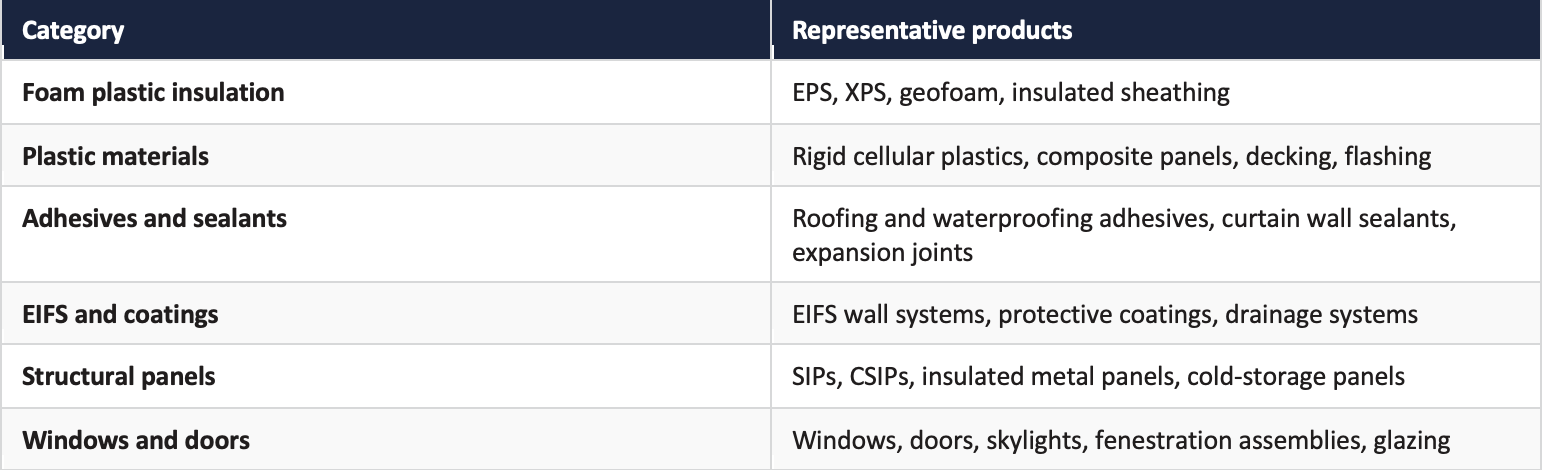
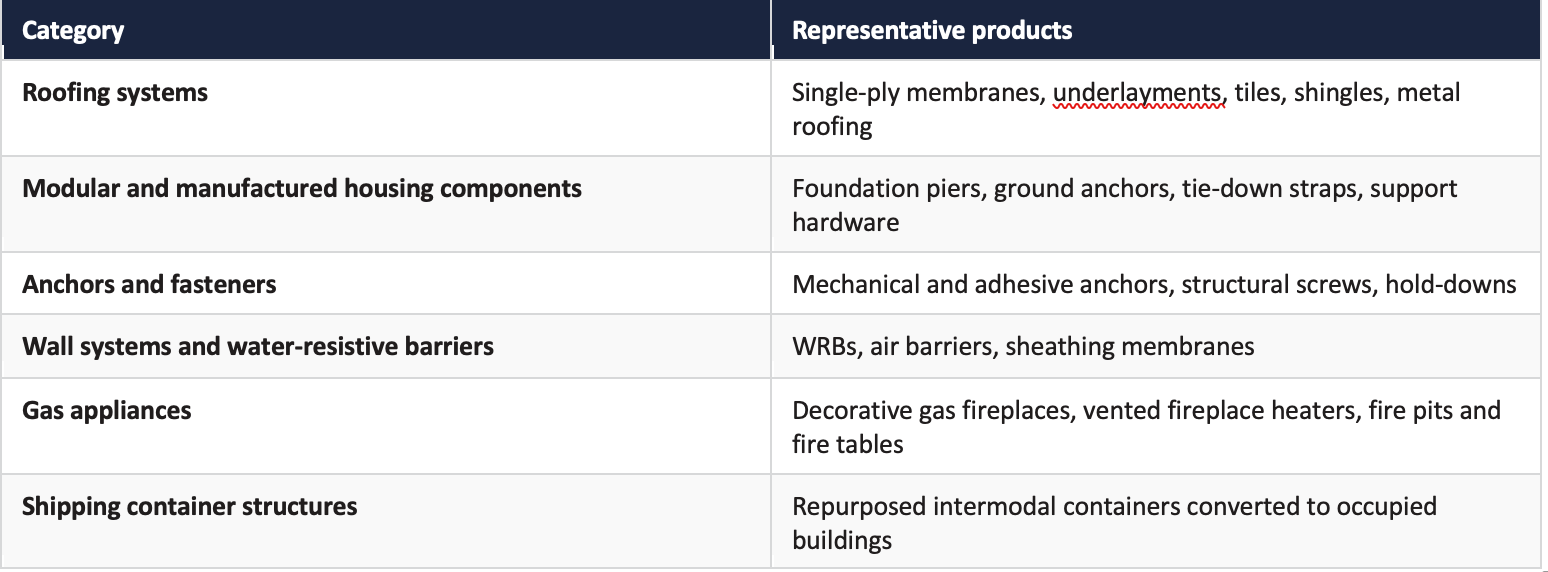
Products outside these categories are not automatically out of reach. Where no acceptance criteria exists for a novel product, new criteria can be developed. A longer path, but a well-established one.
How is Certification Different From a One-Time Lab Test?
A test report says a specimen performed a certain way under defined conditions. A certification says a product, as manufactured on an ongoing basis, conforms to a standard and commits the certifying body to keep verifying that through factory inspection and quality surveillance.
This distinction matters commercially, not just technically. Certifications expire and require renewal. A lapsed listing can stall a project mid-bid, and the manufacturers who get caught by this are almost always the ones who treated certification as a purchase rather than a program.
When Should You Start the Certification Process?
Earlier than most manufacturers do. The fastest certification projects are the ones where the manufacturer identified the governing standard during product development and designed to it, rather than finishing the design and then discovering what it has to pass.
Timelines depend on the product category, the number of standards in scope, and how complete the initial submittal is, which is why any certification body quoting a fixed turnaround before seeing your product data is guessing. What consistently shortens the schedule is a scoping conversation at the front end:confirming the right acceptance criteria, the specimen requirements, and the testing sequence before anything goes to the lab.
Get Your Product Certified
Whether you are bringing a new building product to market or renewing an existing listing, Twining Consulting’s certification team can scope your project. Explore our building product certification services, or contact Lester Arauz, Building Product Certification Department, at larauz@radcoinc.com.
Looking for an existing listing or certification report? Search the Report Directory.


.png)
